

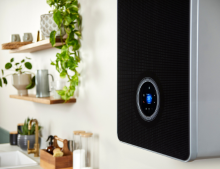



Heat pumps are starting to become a popular choice for UK homeowners. But are heat pumps efficient enough for the Great British weather?
What exactly is a heat pump?
OK, let’s start by understanding what a heat pump is and how it works.
Heat pumps extract the natural warmth from the ground (ground source heat pump) or outdoor air (airsource heat pump), boost its temperature via compression, and transfer heat into your home. This heat can be used just like the heat generated from a boiler – powering your radiators, hot taps, or underfloor heating.
The key difference is that heat pumps burn no fuel to generate the heat. A little electricity is required, to run the compressor, but if you get your energy from a carbon-free supplier then heat pumps can be a completely fuel-free, zero-carbon source of home heating.
Air source
Air source heat pumps use fans to suck air into your heating system, absorbed via an outdoor unit installed outside your home. By compressing this air, the temperature rises dramatically and can be used to heat your home even when it’s below zero outside.
Air source heat pumps are cheaper and quicker to install but won’t be as efficient during extremely low temperatures. On the coldest days, a built-in electric heater will pick up the slack.
Ground source
Ground source heat pumps get their natural warmth from below ground, absorbed via pipes sunk into your garden. The temperature below ground is usually warmer and always more stable throughout the seasons, meaning this option gives you the same efficiency all year round.
They are more expensive to install, but the cost is offset by the fact that you won’t need any other sources of heating whatever the weather is doing.
So how efficient is a heat pump?
The best, brand-new gas combi boilers are in the 90%+ range of efficiency.
That means that for all the fuel burned to provide heat, your home sees almost all of it — and only a little is lost. Heat pumps, however, are 300% efficient. Your home gets 3x more heat than the energy a heat pump costs to run. This will fluctuate depending on the season (for air source heat pumps) and based on where you live and how well your home is insulated, but in general heat pumps are your most efficient solution to home heating.
How to increase your heat pump efficiency
Insulation is the most important aspect of getting maximum efficiency from your heat pump.
Most modern homes will already be set up to get the most from a heat pump, but older properties and renovations may require a few changes to make sure they’re properly insulated. Double glazing, draught-proofing, and cavity wall and loft insulation can all make a big difference to how efficient your heat pump will be. Radiators play a key role too.
Heat pumps are designed to work with water at around 40 degrees, whereas gas boilers usually heat your radiators to around 75 degrees. That doesn’t mean your home won’t be as warm, it just means you need different radiators with more surface area than standard radiators. More surface area means more heat can be emitted from the radiator and enter your home. This same principle applies to underfloor heating, which has a much larger surface area and is one of the best technologies to pair with a heat pump if you want maximum efficiency.


How much does a heat pump cost to run?
Heat pumps offer an alternative approach to home heating to boilers. They’re built to save on energy and to save you money over a long period. They cost more than a boiler to install but cost less to run – meaning over time you’ll make that money back and start making big savings.
Buying and installing an air source heat pump will cost around £13,000, and ground source heat pumps are usually more than £20,000. Both will cost around £1,540 per year in energy bills.
So why switch to a heat pump?

Responsible
Heat pumps are one of the lowest carbon sources of home heating on the market. And remember, if you get your electricity from a green supplier, they can be zero carbon.

Easy
For all their benefits, heat pumps are quite simple. That makes them very reliable and low maintenance. Ground source heat pumps just need an annual service and can last for 25 years.

Affordable
With the Government’s Boiler Upgrade Scheme (up to £7,500 in to help embrace heat pump costs without breaking the bank).
The best way to use your new heat pump
To get close to the ideal 300% efficiency return from your heat pump, there are a couple of things you need to do differently to how you might be used to using your boiler.
Firstly, keep your heat pump on all the time. It’s designed to maintain a constant and consistent temperature, not to switch on and off as the temperature fluctuates. If you do switch it off or turn it right down, it can take a long time (and a lot of energy) to get back up to speed — which means reduced efficiency. Secondly, preparation pays off with heat pumps. Give it time to react by keeping an eye on the weather and anticipating what kind of heating you’ll need. You can experiment for what works best in your home and where you live, but slow and steady wins the race. Try turning it up or down by a degree or two.
Ready to switch?
Find out more about our tried and tested range of heat pumps and lead the way in enjoying carbon-reducing heating.