



Heat pumps are an increasingly popular choice for cost-conscious and environment-conscious homeowners. With the opportunity to reduce your carbon footprint at the same time as your energy bills, but without giving up on all the conveniences you’re used to from a boiler, it’s easy to see why they’re becoming the go-to responsible heating solution. But, with the cost of buying one and getting it installed, is it really worth it?

What is a heat pump?
Let’s start by understanding exactly what a heat pump is.
Heat pumps take the natural warmth of the outdoors, boost its temperature via compression, and release it as heat into your home’s hot taps, radiators, or underfloor heating. The compression is powered by electricity, so energy costs are minimal, and heat pumps can also deliver up to 400% efficiency rates as a result. (That means for every unit of electricity you use to heat up the air, you get four times as much heat inside your home.)
Heat pumps come with loads of benefits, chief of all the feel-good factor that you get from choosing a more responsible heating solution and preparing your home for a fuel-free future.
Benefits of heat pumps

Low Carbon
Heat pumps don’t burn any fuel to provide heat. The only energy they use is electricity, to provide the compression process which heats up the ambient temperature. That means that if you get your electricity from a green supplier, your heat pumps could be a zero-carbon heating source and therefore fully renewable and net zero.

Efficient
Heat pumps can be 300% efficient, making them more efficient than other heating systems. They can produce up to 3x the amount of energy compared to the energy they use to run. For comparison, the best boilers are around 85% efficient.

Economic
As well as being kinder to the environment, heat pumps are kinder to your bank account. By only using a little electricity, your energy bills are lower and more stable because you aren’t reliant on the volatile prices of gas or oil. You’ll also pay 0% VAT on heat pumps, and over time your lower fuel bills will offset the cost of the heat pump itself.
Can I control my heat pump like my boiler?
For the most part, you’ll find that you can control your heating in much the same way that you’re used to with your boiler. That means apps on your smart phones, thermostats in your home, and individual room controls. You can also still turn your radiators up and down as usual, using the thermostatic valves. You can also still use timed settings – if you want your home to be cooler overnight and warmer in the mornings and evenings, for example. The main differences between the way you control your heat pump and your boilers are:
You should never turn your heating fully off.
Heat pumps are designed to maintain a consistent temperature in your home, so if you switch them off it can take a longer time (and be more inefficient) to heat your home again. That doesn’t mean you need to heat your home unnecessarily whilst you’re away though. Just turn your heating down, not all the way off.
Heat pumps can be slower to react than boilers.
The same principle applies for adjustments during the day or over the seasons. Keep an eye on the weather and try to anticipate the level of heating you’ll need. With heat pumps, it’s best to try increasing or decreasing the temperature by a degree or two – rather than cranking it up for immediate heat.
Is my home suitable for a heat pump?
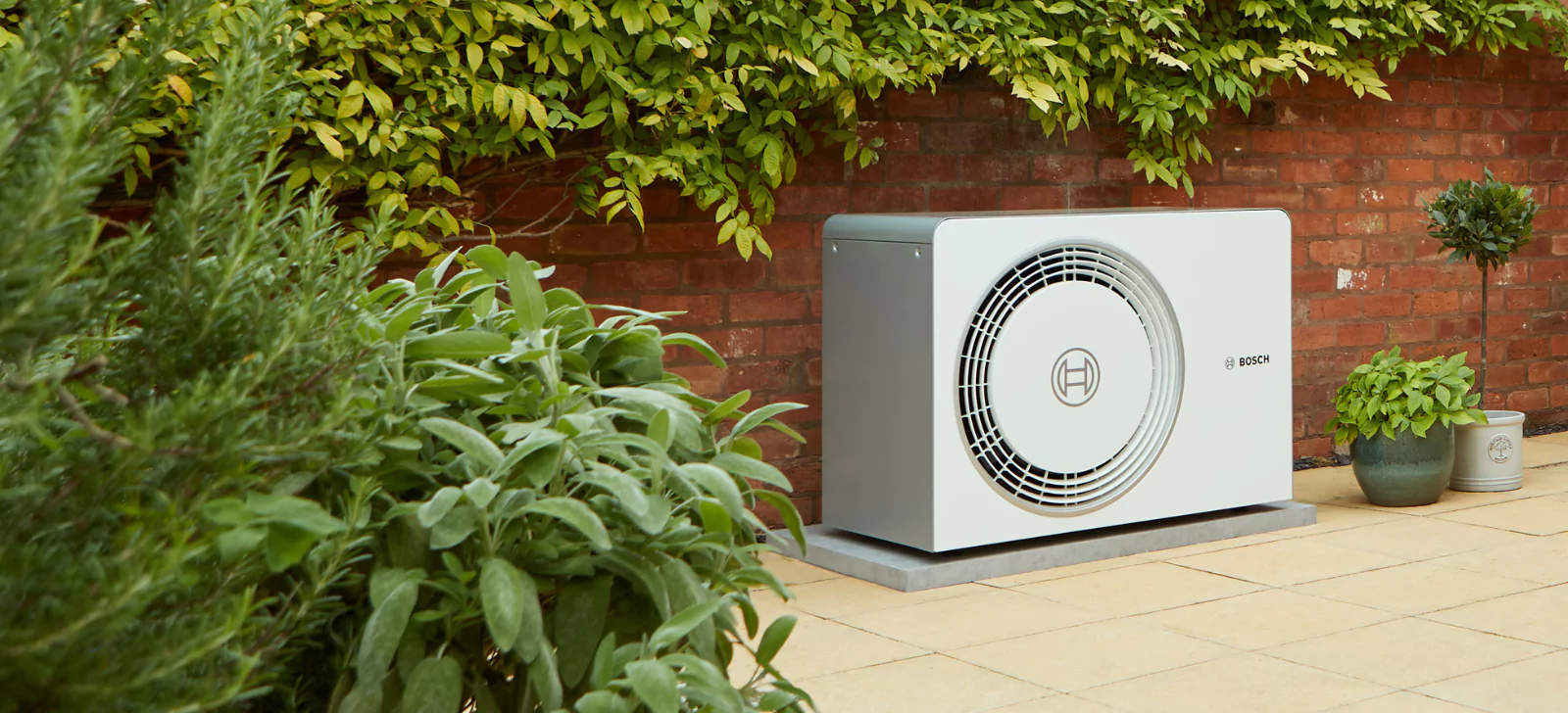
Almost all new build homes are suitable for an air source heat pump. All you need is good insulation and somewhere to install the discrete outdoor unit. Air source heat pumps are also exempt from planning permission, in most cases. For older homes, you may need to make some improvements to get the most out of your heat pump. Double glazing, cavity wall insulation, and loft insulation will go a long way to helping your heat pump provide low carbon heating and keep all that warmth inside your home. (For ground source heat pumps, you need to factor in whether you have space for the earthworks to install pipes.)


How much do heat pumps cost?
Bear in mind that heat pumps are built to save you money in the long term, not straight away.
The installation cost of a heat pump will differ from house to house and from size and type of heat pump chosen. As a rule of thumb, an air to water heat pump will cost around £8k to install and a ground source heat pump could be anything up to and around £20k. This though is very dependent on the site and as to whether the existing heating system can be used and the position of the equipment etc.
Ground source heat pumps are more expensive because of the earthworks and added installation costs. But in both cases, you’ll be getting 3x the amount of heat than the electricity you’re using. You’ll see those savings in your energy bills from day one, and once you’ve saved enough in energy to offset the cost of the heat pump, it becomes a significantly cheaper heating source overall.
Plus, you can’t put a price on feeling good about a more environmentally friendly home.
So, are heat pumps worth it?
Absolutely.
If money’s the most important factor, then consider you’re going to get lower energy bills, higher energy efficiency, an unlimited source of heat (the natural ambient temperature), and you’re only going to use a little bit of electricity. Plus, once all those savings have added up to cancel out the cost of buying and installing the heat pump in the first place – you’re going to be getting home heating that costs next to nothing.
But heat pumps are about more than just money. By lowering your carbon footprint, you’re doing your bit in the fight against climate change. And by adopting responsible heating technologies, you’re futureproofing your home for an age of cleaner fuels. Whichever way you look at it, it’s a win-win.
Ready for a Heat Pump?
To find out more about heat pumps, including the way they work, the costs involved, and the process for getting one installed in your home, visit our Heat Pumps page.